
SEO Trends 2026: AI Search, GEO & Core Web Vitals Guide
AI search dominates 2026. Learn how GEO, ChatGPT optimization, INP Core Web Vitals & branded search growth are replacing traditional SEO tactics.
Generative Engine Optimization (GEO) is the work of making a business easy for ChatGPT, Gemini, Perplexity and Google AI Overviews to find, understand and quote. It means restructuring content into direct answers, cleaning up entity and schema data, and earning citations on sources these systems already trust. SEO stays the foundation. GEO decides whether you get named inside the answer.
This guide covers what GEO actually involves, why it matters more every month, the specific parts of it that make a measurable difference, how we run it as a service, and a short checklist you can act on today.
Generative Engine Optimization is not a rebrand of SEO. Search engines rank pages in a list and let the person choose. AI systems compress an answer and pick a small number of sources to name inside it. ChatGPT, Gemini, Perplexity and Google AI Overviews all work on the same basic pattern: they retrieve candidate content, judge which parts are trustworthy and specific enough to use, then generate a sentence that quotes or paraphrases it. GEO is the practice of making that selection process pick you instead of a competitor.
The overlap with SEO is real and worth being honest about. Most of these systems still lean on a search index to find candidate pages, so a site with nothing indexed and no authority has little chance of being cited regardless of how well the content is written. GEO does not replace that groundwork. It adds a layer on top of it: content shaped to be lifted cleanly, entity data that removes ambiguity about who you are, and a presence on the sources these models already treat as reliable.
Two changes are reshaping where search traffic goes. Google AI Overviews now answer a large share of queries directly on the results page, above the traditional blue links. And a growing number of buyers skip the search box altogether and ask ChatGPT, Gemini or Copilot the question directly, expecting a named recommendation rather than a list of links to click through. Neither behaviour is reversing.
On our own site, the AI Performance reporting Bing rolled out inside Bing Webmaster Tools currently shows Bing Copilot citing seosmohub.com somewhere between 28 and 35 times a day. That single number matters more to us than most ranking positions, because it confirms an AI system is already treating parts of our content as citable, and the same report can tell you whether the same is true for your own site the moment you check it. Google's own Search Central documentation is equally direct about the relationship between the two disciplines: the SEO best practices that support ranking in regular Search also support appearing in AI Overviews and AI Mode, because both draw on the same core ranking and quality systems. Nothing you have already done correctly for SEO is wasted. It is the starting point GEO builds on.
GEO gets pitched as something mysterious. In practice it comes down to five concrete areas of work, roughly in order of how quickly each one pays back.
AI systems need to resolve who is talking before they decide whether to trust what is said. Organization, Service, FAQ and Person schema markup, paired with a business name, address and description that read identically everywhere you appear online, remove that ambiguity. A business whose name is spelled three different ways across its own website, its Google Business Profile and its social profiles is simply harder for a model to verify, and sources it cannot verify get left out of the answer.
A page that spends three paragraphs setting the scene before it answers its own question rarely gets quoted, because the model has to guess which sentence is the real answer. Put the direct answer to the page's main question inside the first 40 to 70 words, in plain language, then use the rest of the page to support and expand on it with detail a careful reader wants. This also happens to be better for the human visitor who arrived in a hurry, which is exactly the kind of overlap worth paying attention to.
Keyword tools show what people type into a search box. They do not show what people ask an AI assistant in a full sentence, and the two overlap less than most people assume. Building a page around the actual question a buyer would type into ChatGPT, such as "who handles affordable logo design for a new shop in Jaipur", produces different and usually more specific content than building the same page around a keyword like "logo design Jaipur".
None of the above matters if the crawlers behind these systems cannot reach the page in the first place. Check robots.txt for accidental blocks on GPTBot, PerplexityBot and similar crawlers, confirm the content that matters renders without requiring JavaScript, and keep anything you want cited out from behind a login wall. An llms.txt file at the domain root, listing in plain text what the site covers and linking to the pages that answer common questions, is a small, low-effort addition that gives these systems a clean map instead of making them guess.
Off the site, a version of the same principle behind link building applies. Getting mentioned on sources a model already leans on for grounding raises the odds that claims about your business get treated as verified rather than unverified. This is digital PR and citation building done on real, relevant publications and directories, aimed at trust rather than volume.
Our GEO engagements start with a baseline, not a plan. We take the real buying questions in your market and run them against ChatGPT, Gemini, Perplexity and Google AI Overviews, then record exactly where you appear and where a competitor gets named instead. That baseline tells us whether the problem is content, schema, crawler access or a missing citation, rather than guessing at all four at once.
From there the work covers entity and schema cleanup on the pages that matter most, rewriting priority pages so the direct answer sits at the top instead of buried in paragraph three, and building the citations that support those claims elsewhere. Every engagement includes an llms.txt file and a check of crawler access, because a well-written answer a bot cannot reach earns nothing at all. Reporting is a monthly re-test of the same buying questions, so progress is something you can see for yourself, not a screenshot we chose.
This work sits under our GEO and AI search optimization service, and it is scoped the same honest way as the rest of our SEO work: a plan built from your own free website audit first, not a template applied to every client regardless of fit. Current plans and pricing are on the packages page.
No agency, including ours, can guarantee a specific citation inside ChatGPT or Google AI Overviews. These systems decide their own outputs, retrain on their own schedule, and change behaviour without notice to anyone outside the company that runs them. What GEO work can do, and what we report on every month, is measurably improve the inputs these systems rely on: clearer entity data, more citable content, working crawler access and more trusted mentions elsewhere. Anyone promising guaranteed placement inside an AI-generated answer is promising something outside their own control.
For the wider context this checklist sits inside, see our related guide on SEO trends, AI search and GEO for 2026.
SEO earns a position in a ranked list of search results. GEO earns a mention inside an AI-generated answer, which often replaces that ranked list on the page entirely. The two are not competing disciplines. AI systems draw heavily on the same search indexes SEO already targets, so technical SEO and content quality remain the foundation, and GEO adds entity data, answer formatting and AI-specific tracking on top of it.
ChatGPT, Google AI Overviews, Gemini and Microsoft Copilot through Bing currently have the widest reach for everyday commercial questions. Bing Webmaster Tools now reports Copilot citations directly inside its AI Performance data, and Google Search Console is building out similar reporting for AI features, so both are worth checking on a regular schedule rather than guessing at your visibility.
Increasingly, yes. Good rankings help, because AI systems lean on the same search indexes, but ranking well does not guarantee a citation. Google AI Overviews already answer many queries above your first-place result, and buyers using ChatGPT or Perplexity never see your ranking at all. GEO work makes the authority you already earned readable and quotable for machines, protecting traffic you would otherwise lose quietly.
 SEO
SEO
AI search dominates 2026. Learn how GEO, ChatGPT optimization, INP Core Web Vitals & branded search growth are replacing traditional SEO tactics.
 SEO
SEO
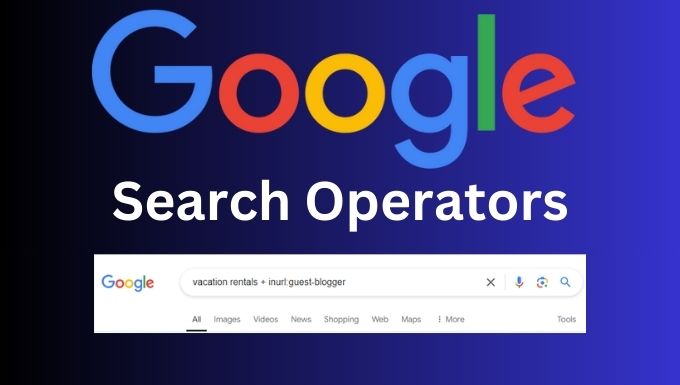
Use Google search operators for link building the right way. Find guest posts, resource pages, and PR prospects with 45+ query templates and examples.
 SEO
SEO
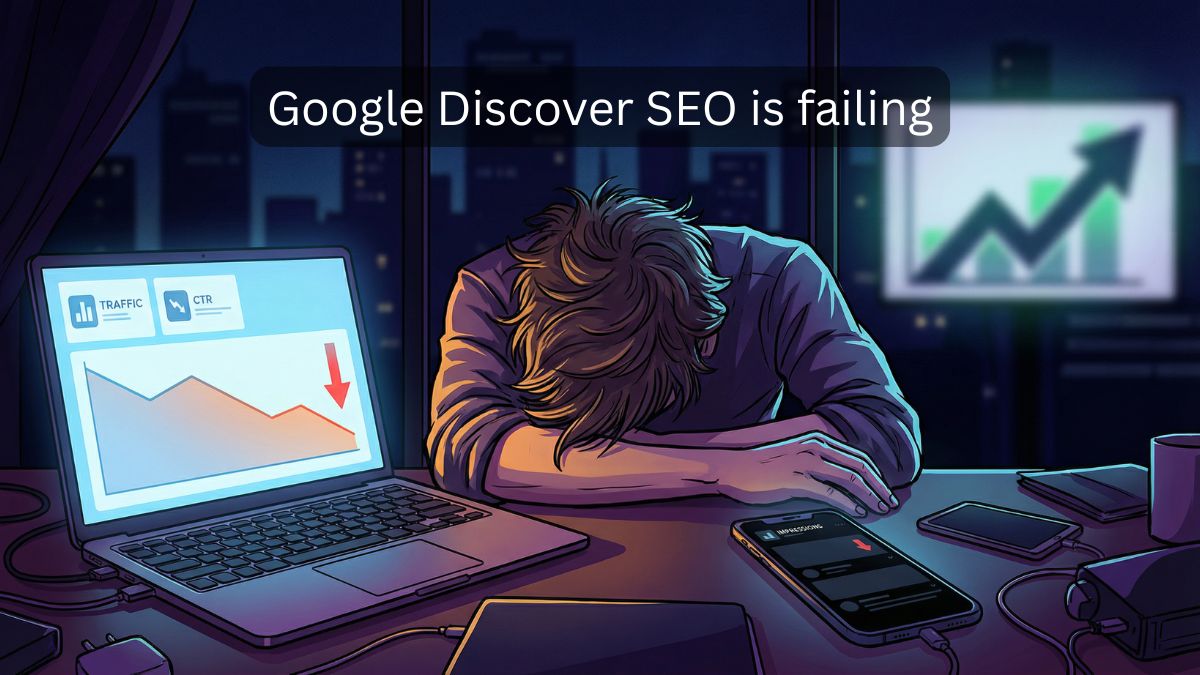
Your Google Discover strategy is broken. Here's exactly what's killing your traffic and the proven fixes that generated 1M+ clicks for our clients in 2026